Ethiopia Gedeb Red Honey
Ethiopia Gedeb Red Honey
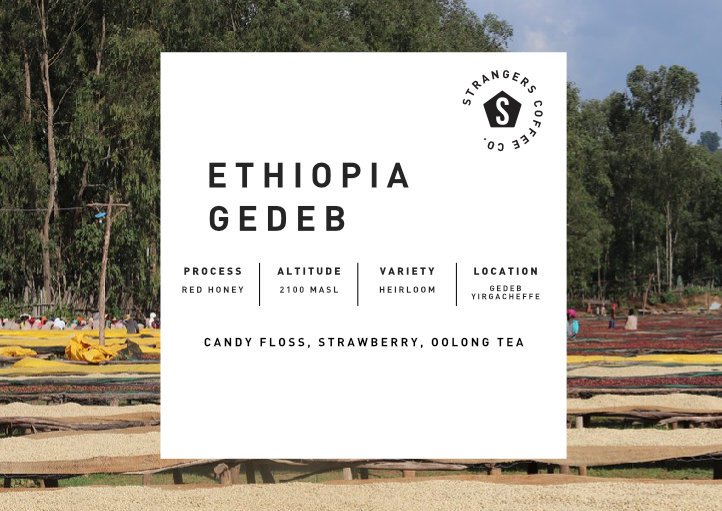
NEW: Candy Floss / Strawberry / Oolong Tea
ALTITUDE - 2100 MASL // REGION - GEDEB YIRGACHEFFE // PROCESS - RED HONEY // VARIETY - HEIRLOOM
Ethiopia Gedeb Red Honey 100% Arabica Speciality Grade Coffee
Origin and Harvest
Ethiopian coffee production is closely shaped by the country’s three distinct seasons, each playing a vital role in coffee growth and quality. The Bega season from October to January is the long dry period and is essential for coffee harvesting and processing. The Belg season from February to May brings the first rains, which are critical for coffee flowering and early fruit development. The Krempt season from June to September is marked by heavy rainfall from the east and supports the later stages of coffee cherry development and ripening. By late September the rains stop suddenly, creating ideal conditions for ripening and leading into a busy Ethiopian coffee harvest that typically begins in November.
Ephtah Speciality Coffee
Ephtah Specialty Coffee focuses on building sustainable and transparent coffee supply chains that benefit customers, coffee farmers and local communities. The company places strong emphasis on the empowerment of women in the Ethiopian coffee sector, recognising their essential role in social and economic progress. Quality control is prioritised at every stage, from sourcing to export, ensuring premium green coffee beans and long -erm satisfaction for all supply chain partners.
Lalesa Gedeb
Lalesa in Gedeb has become a key sourcing location for Ephtah Specialty iCoffee. The Lalesa site is fully owned by Ephtah, with land acquired in July 2023 and warehouses and drying beds constructed in September 2023. The area is mainly Christian, with Protestant and Orthodox communities. Ephtah supports the local population through social initiatives such as a daycare centre for farmers’ children and involvement in the Ama Commitment scheme, which supports women coffee farmers.
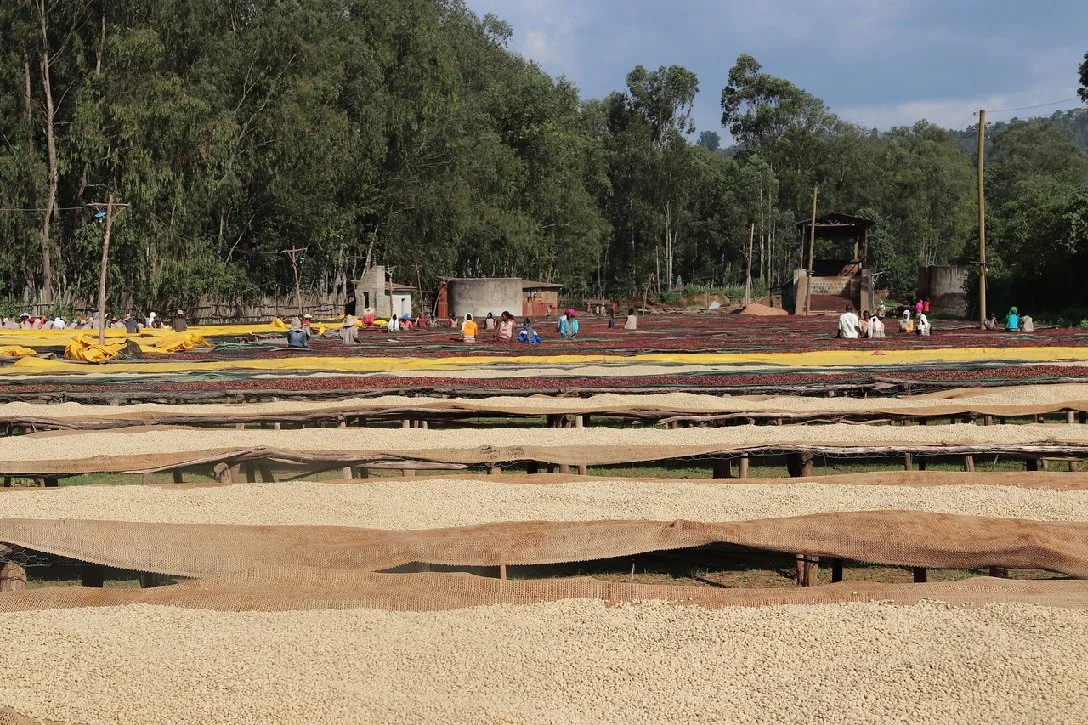
The farm sits at an elevation of 2150 to 2200 MASL and covers 3.5 hectares. It employs 20 permanent staff, increasing to around 250 workers during the harvest period from late November to January. The site has 350 drying beds and grows traditional Ethiopian Heirloom coffee varieties.
Lot Information
The Lalesa Gedeb Red Honey coffee lot is grown at elevations of 2150 to 2200 MASL and has a total parcel size of approximately 3600 kg. Coffee is grown naturally under tree shade, mainly Ensete or false banana trees. Selected ripe cherries are purchased from nearby farmers. The coffee is floated to remove quakers, then placed on drying beds for one day to increase mucilage. After pulping, the coffee is dried under shade for fourteen to eighteen days. These processing methods are carefully chosen to maximise cup quality. Once dried and stored, the coffee is transported to Moplaco in Gerji Addis Ababa and then shipped by train to Djibouti for export.
Red Honey
Red honey coffee is a coffee processing method that sits between washed and natural processing. After harvesting, the coffee cherries are pulped to remove the skin, but a significant amount of sticky fruit mucilage is intentionally left on the beans during drying. In red honey processing, more mucilage is retained than in yellow or white honey coffees, but less than in black honey.
The name red honey refers to the deep reddish colour the mucilage develops as it oxidises while drying, rather than the presence of actual honey. This method requires careful control of drying conditions, often using shaded raised beds, to prevent over fermentation.
Economic Social Governance
Ephtah has invested in multiple social and environmental projects linked to this coffee lot. A daycare centre for farmers’ children is planned to open in Gedeb, and several women farmers are enrolled in the Ama Commitment scheme. Farmers receive an initial payment as soon as coffee is delivered to the site, ensuring fair and timely compensation.
General
The main challenge during this crop cycle has been financial pressure caused by National Bank of Ethiopia policies aimed at controlling inflation. Despite this, the Lalesa site remains focused on producing high quality Ethiopian specialty coffee while supporting the local economy. Future plans include expanding the Ama Commitment scheme, building a water tank for flotation to remove quakers and increasing the number of drying beds. Ephtah also plans to grow additional crops on the land, allowing local people to farm and sell produce locally. Alongside coffee, farmers grow Ensete and false banana, which are used to make the traditional food Kocho. The Ephtah Lalesa site is the largest drying site in Gedeb, highlighting the company’s long term commitment to quality, scale and sustainable coffee production.