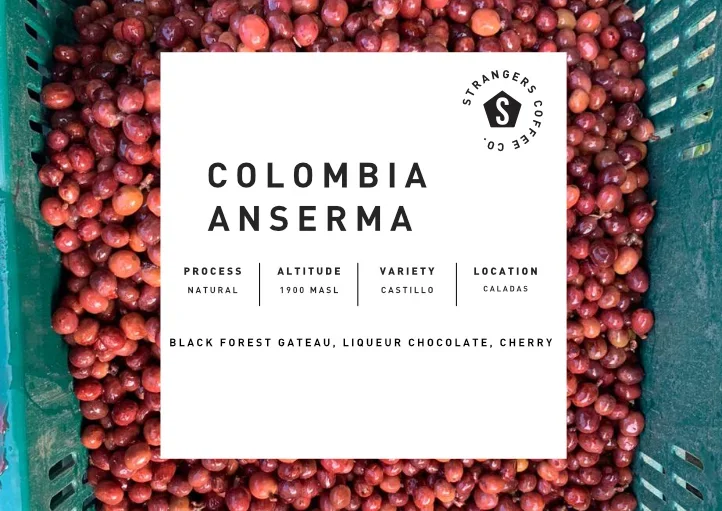
 Image 1 of 3
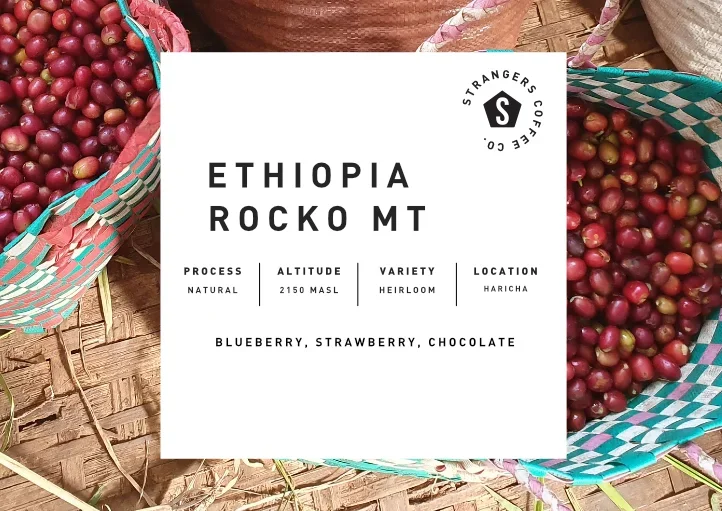
 Image 2 of 3
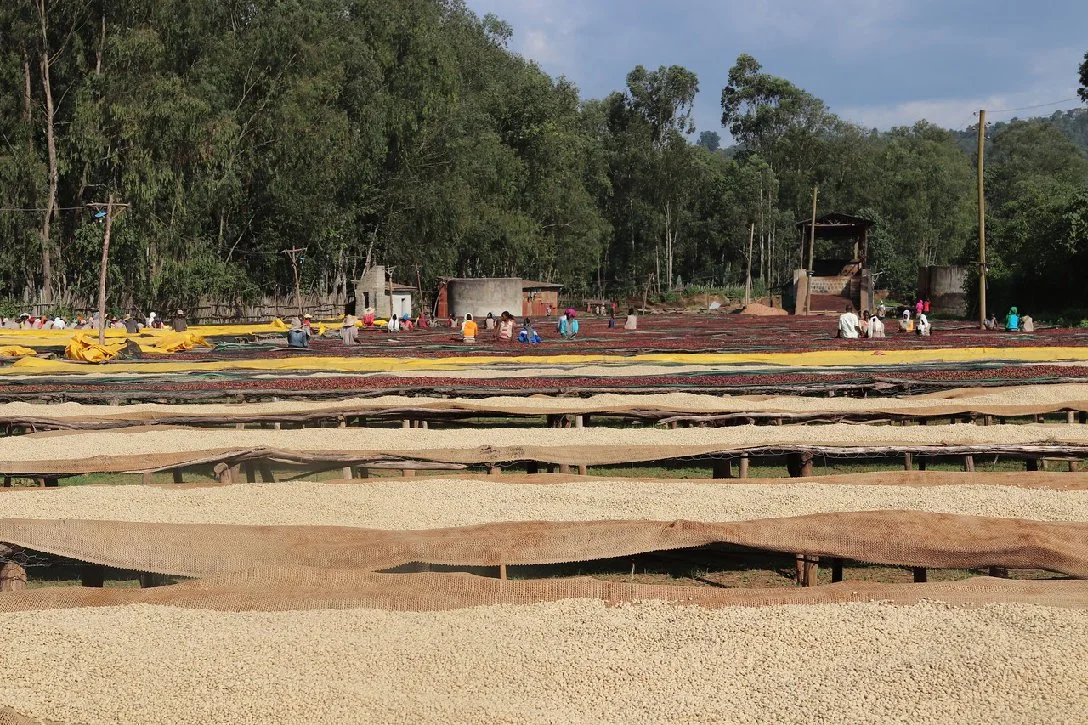 Image 3 of 3
About this coffee
G1 Cherry Bomb (Bette Buna) 100% Arabica Speciality Grade Coffee
-
Altitude: 1900 - 2200 MASL
Location: Megadu, Guji
Process: Natural - Anaerobic 96hr
Variety: 74112,74110, Wild Guji Megadu -
Cherry Liqueur / White Peach / Guava
-
Bette Bunna, meaning “House of Coffee,” is based in the highlands of Taferi Kela, Sidamo, where coffee production is closely connected to community life and local opportunity. What began as a family responsibility has developed into a wider effort to produce high-quality coffee while supporting long-term development for farming communities. The company works with a skilled team that manages each stage of production with careful attention to quality, traceability and consistency.
At the Taferi Kela farm, freshly picked cherries are delivered to Bette Bunna’s wet mill, where they are processed alongside cherries supplied by surrounding community farmers. Further south-east, in Megadu, Guji, Bette Bunna works with local chiefs and farmers to manage and harvest coffee from shared land, with cherries processed at the Megadu wet mill. This structure is designed to keep knowledge, responsibility and value within the producing communities.
Bette Bunna operates within the specialty coffee sector with a focus on traceability, quality and long-term responsibility. The company approaches specialty coffee as a commitment to careful production rather than simply a label or processing style. Its work is centred on how coffee is grown, selected, handled and processed, with an emphasis on building transparent supply relationships and understanding the expectations of the market it serves.
In addition to its own production, Bette Bunna works directly with independent farmers who process their own cherries into parchment. These relationships maintain traceability while respecting the autonomy and craftsmanship of each producer. Farmers including Sentayu, Duba, Saffay, Hassan, Haji Bule and Birkeneh form part of this broader supply network, which is built around trust, quality and shared growth.
Bette Bunna’s wider work connects coffee production with farm renovation, knowledge development and entrepreneurship. Central to this approach is its “living classroom,” where farmers learn through practical demonstration, experimentation and direct observation. Through demonstration plots, training and shared experience, the programme focuses on improved farming practices, agroforestry renovation and stronger decision-making at farm level. Over the next two years, Bette Bunna’s programmes aim to reach more than 3,500 farming families.
A key part of this work is Bette Bunna’s nursery, which produces more than 350,000 new varietal coffee seedlings each year, alongside a range of regenerative shade trees. These seedlings are used to encourage practical change at farm level. Farmers are supported not simply for attending training, but for applying the knowledge in practice, improving their farms, adopting better techniques and investing in long-term quality and resilience. Bette Bunna also supports entrepreneurship programmes designed to help farming families develop additional income streams and strengthen community resilience beyond coffee.
Lot K, Cherry Bomb, is produced by Bette Bunna in Megadu, Guji. The coffee is processed as a natural using a 96-hour anaerobic fermentation method. The process begins with carefully sorted cherries placed in hermetic barrels or high-capacity bags to create a low-oxygen environment.
During fermentation, naturally occurring microorganisms, including yeasts and lactic acid bacteria, break down sugars within the cherry. The 96-hour fermentation period gives the production team a controlled framework for managing time, oxygen exposure and lot separation before drying. This restrained-oxygen approach is used to guide fermentation while maintaining control over the process.
Once fermentation is complete, the coffee is dried and prepared according to the required lot specifications before further assessment and export preparation. Lot K reflects Bette Bunna’s focus on careful cherry selection, controlled anaerobic fermentation and traceable production from Megadu, Guji.
-
Whole beans
Recommended for best freshnessEspresso Fine
Suitable for home espresso machinesMoka Pot Fine
Suitable for moka pots and stove topsFilter Medium
Suitable for V60, aeropress, chemex, kalita & clever dripperCafetiere Coarse
Suitable for cafetiere, french press and electric filter brewersIf you would like you’re coffee ground for a specific brew method or setting, please fill in the addional information box during checkout
-
We recommend you store your coffee in a cool, dry area away from direct sunlight. Keep them in their original bag, or transfer them to an airtight container.
For the best flavour, enjoy your coffee within three months of the roast date. Avoid storing coffee in the fridge or freezer.
-
Complimentary Royal Mail Tracked 48 delivery is available on all UK orders over £45.
At checkout, you can choose between Royal Mail Tracked 24 and Royal Mail Tracked 48 delivery.
Tracked 24 typically arrives within 1–2 working days, while Tracked 48 typically arrives within 2–3 working days. Please allow a little extra time during particularly busy periods.
If your order has not arrived within 14 days, please contact us.
ALTITUDE - 2100 MASL // REGION - GEDEB YIRGACHEFFE // PROCESS - BLACK HONEY // VARIETY - HEIRLOOM
Ethiopia Gedeb Black Honey 100% Arabica Speciality Grade Coffee
Origin and Harvest
Ethiopian coffee production is closely shaped by the country’s three distinct seasons, each playing a vital role in coffee growth and quality. The Bega season from October to January is the long dry period and is essential for coffee harvesting and processing. The Belg season from February to May brings the first rains, which are critical for coffee flowering and early fruit development. The Krempt season from June to September is marked by heavy rainfall from the east and supports the later stages of coffee cherry development and ripening. By late September the rains stop suddenly, creating ideal conditions for ripening and leading into a busy Ethiopian coffee harvest that typically begins in November.
Ephtah Speciality Coffee
Ephtah Specialty Coffee focuses on building sustainable and transparent coffee supply chains that benefit customers, coffee farmers and local communities. The company places strong emphasis on the empowerment of women in the Ethiopian coffee sector, recognising their essential role in social and economic progress. Quality control is prioritised at every stage, from sourcing to export, ensuring premium green coffee beans and long -erm satisfaction for all supply chain partners.
Lalesa Gedeb
Lalesa in Gedeb has become a key sourcing location for Ephtah Specialty iCoffee. The Lalesa site is fully owned by Ephtah, with land acquired in July 2023 and warehouses and drying beds constructed in September 2023. The area is mainly Christian, with Protestant and Orthodox communities. Ephtah supports the local population through social initiatives such as a daycare centre for farmers’ children and involvement in the Ama Commitment scheme, which supports women coffee farmers.
The farm sits at an elevation of 2150 to 2200 MASL and covers 3.5 hectares. It employs 20 permanent staff, increasing to around 250 workers during the harvest period from late November to January. The site has 350 drying beds and grows traditional Ethiopian Heirloom coffee varieties.
Lot Information
The Lalesa Gedeb Red Honey coffee lot is grown at elevations of 2150 to 2200 MASL and has a total parcel size of approximately 3600 kg. Coffee is grown naturally under tree shade, mainly Ensete or false banana trees. Selected ripe cherries are purchased from nearby farmers. The coffee is floated to remove quakers, then placed on drying beds for one day to increase mucilage. After pulping, the coffee is dried under shade for fourteen to eighteen days. These processing methods are carefully chosen to maximise cup quality. Once dried and stored, the coffee is transported to Moplaco in Gerji Addis Ababa and then shipped by train to Djibouti for export.
Black Honey
Black Honey is a type of Honey Process Coffee where the coffee cherry’s skin is removed but a large amount of sticky fruit mucilage is left on the bean during drying. It is called “black” because the beans are dried slowly, often in heavy shade, which darkens the mucilage as it ferments and dries. This method usually produces coffees with pronounced sweetness, syrupy body and complex fruit-forward flavours, sitting somewhere between washed and natural processed coffees.
The name red honey refers to the deep reddish colour the mucilage develops as it oxidises while drying, rather than the presence of actual honey. This method requires careful control of drying conditions, often using shaded raised beds, to prevent over fermentation.
Economic Social Governance
Ephtah has invested in multiple social and environmental projects linked to this coffee lot. A daycare centre for farmers’ children is planned to open in Gedeb, and several women farmers are enrolled in the Ama Commitment scheme. Farmers receive an initial payment as soon as coffee is delivered to the site, ensuring fair and timely compensation.
The main challenge during this crop cycle has been financial pressure caused by National Bank of Ethiopia policies aimed at controlling inflation. Despite this, the Lalesa site remains focused on producing high quality Ethiopian specialty coffee while supporting the local economy. Future plans include expanding the Ama Commitment scheme, building a water tank for flotation to remove quakers and increasing the number of drying beds. Ephtah also plans to grow additional crops on the land, allowing local people to farm and sell produce locally. Alongside coffee, farmers grow Ensete and false banana, which are used to make the traditional food Kocho. The Ephtah Lalesa site is the largest drying site in Gedeb, highlighting the company’s long term commitment to quality, scale and sustainable coffee production.